
Everything is Training
The Great Ammonia Spill of 2024

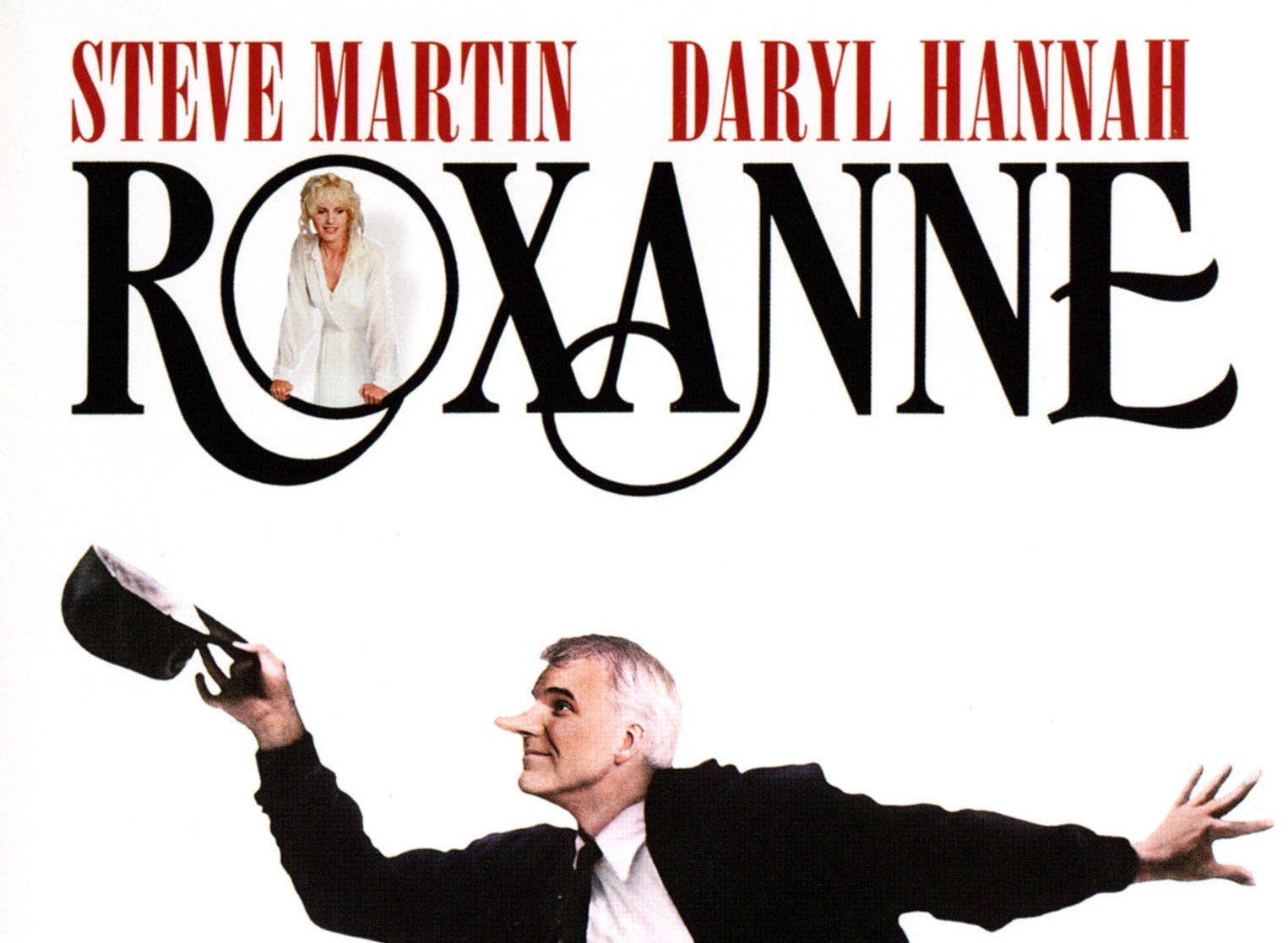
Prior to starting an official course on The Essentials of Firefighting (“Firefighter I”), my fire training amounted to starting campfires that didn’t burn down camp sites, dutifully replacing my smoke detector batteries once per year, and watching Backdraft. In retrospect, I have decided that watching Roxanne, a 1987 classic starring Steve Martin and Darryl Hannah, also counts. In fact, if you take nothing else away from today’s installment, I hope you go watch it.
I have decided not to count the very first firefighting drill nights I attended in the two weeks after I joined the department. That’s not because they weren’t helpful, but because they were possibly the most traumatic way to learn about some of the things that fire fighters really do.
Some people, like my former self, may think that firefighting’s biggest danger is being burned to a crisp in a blazing structure fire. But it turns out that burning to death usually isn’t even in the top three things that take fire fighters’ lives. The top reason is sudden cardiac arrest from overexertion–by a long shot. Well over 40% of deaths are attributable here. The next two reasons are typically being struck by an object or a vehicle. After that, exposure.
Exposure to what? Every year, all active firefighters must be re-certified in hazardous materials operations because those exposures are usually hazardous materials that cause immediate harm or long-term cancer. Sometimes those materials are byproducts of combustion, but many times they are not. I happened to begin my tenure on the first day of haz-mat re-certification, where I arrived with zero training and therefore zero “re” learning.
The instructor began with a refresher lecture, which was beyond Greek to me. He dutifully reviewed haz-mat labeling systems, which looked like a mysterious series of multi-colored diamonds and numbers and letters that somehow amounted to something terrible (“methly-ethyl-bad stuff”). I wished I remembered even a tiny bit of chemistry, but it turns out that 1999 was an impossibly long time ago from a stoichiometric point of view. This was basically hieroglyphics. Then he turned attention to an ERG, which is not an Employee Resource Group in the fire service–it’s an Emergency Response Guide.
My main takeaway was that somehow a firefighter is supposed to notice that a toxic substance may be present and then have the presence of mind to look up its chemical name and plan an appropriate mitigation response accordingly. Whatever I thought about fire fighting before, I definitely did not expect it to involve so much chemical awareness or proximity. I certainly didn’t expect to be one of the people who might happen upon a toxic chemical and have some idea what to do about it.
The next week was our practical. This time we skipped the slide show and jumped on our apparatus for a short trip behind the station for exercises related to possible haz-mat responses. I was assigned to the first response team. Our crew chief selected one person to conduct an evaluation of the scene and inadvertently walked directly through the toxic chemical spill. They both died immediately. A deputy then had to conduct his own investigation and concluded that the spilled chemical was ammonia. Based upon the ERG, it is classified under “Gases - Toxic and/or Corrosive” and listed as “may be fatal if inhaled, ingested, or absorbed through skin”. Also critical: “May react violently with water.” (WHAT?!?). Wear SCBA.
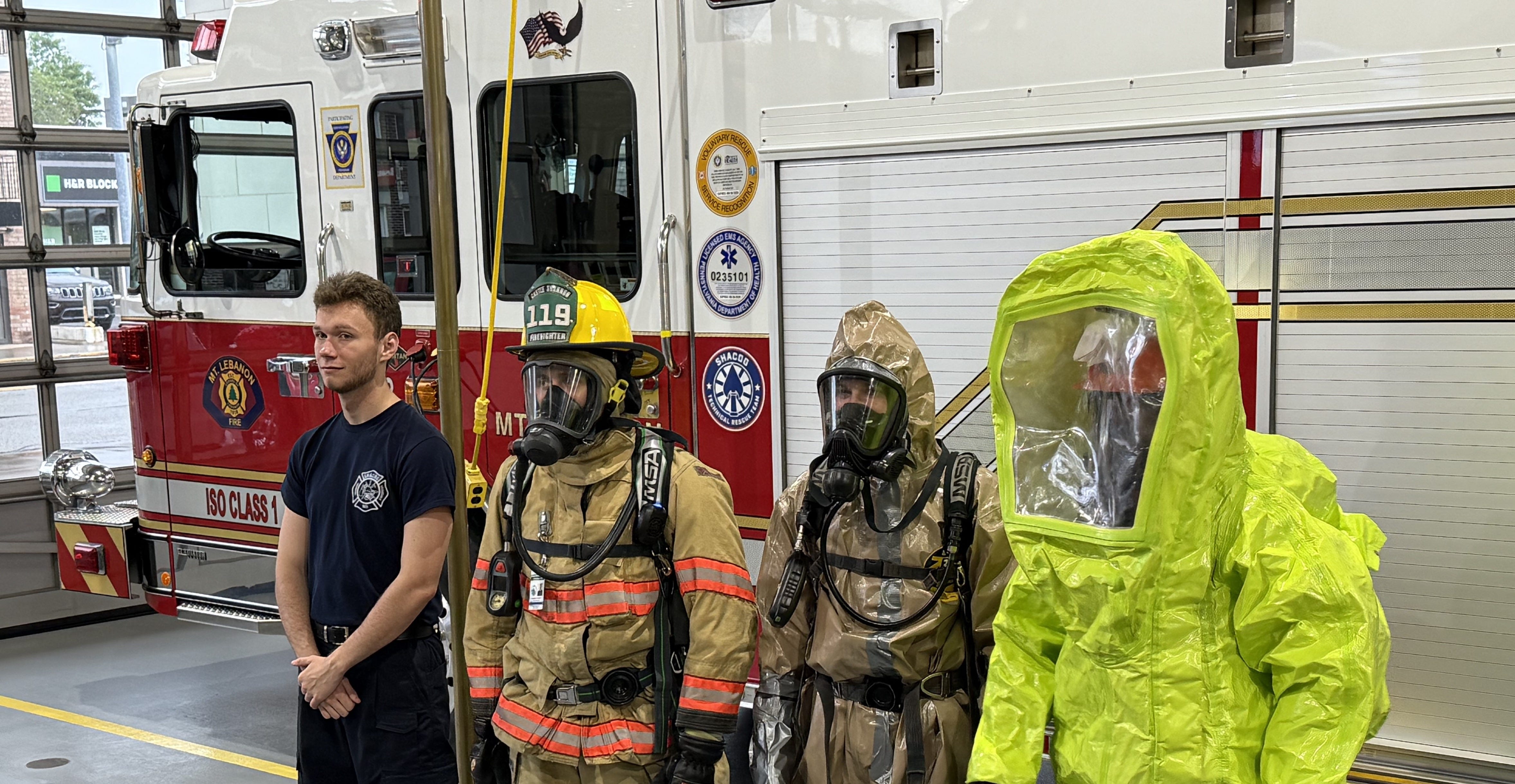
What is SCBA? Self-contained breathing apparatus (like its cousin, self-contained underwater breathing apparatus, SCUBA, with which many more people are familiar). Having been an active member for only 11 days, I had not been trained on how to use an SCBA device. I did have a mask, but I didn’t know how to put it on. I did not know how to attach an air cylinder to it. And I felt there was a better than 50/50 chance I might suffocate myself trying. I therefore concluded I was extremely likely to die of ammonia exposure in my first training exercise, possibly resulting in the shortest fire fighting career in history.
Very fortunately, the ammonia was fake and the exercise was primarily designed to demonstrate how cavalier people tend to be around haz-mat spills. Our dead fire fighters were allowed to get back up and observe the rest of the drill. The second team learned from our foibles and was immediately squared away with proper PPE, an accountability board, organized mitigation techniques and a systematic approach to ensuring the toxic spill was handled safely and efficiently.
On the whole, I was extremely impressed with how quickly people took in the lessons of the evening, addressed their attitudes and behavior, and adjusted their approach based on a combination of what they already knew and had just learned. Only rarely have I seen a team able to mobilize and apply learning that quickly and collaboratively. Even sports teams struggle to adjust when they meet adversaries that don’t behave as expected. Professional teams almost always struggle through learning processes that are impeded by ego and competition. This group was different.
Thankfully, I made it through our first major training exercise unscathed and slightly wiser about the nature of fire fighting. It was my first lesson in how much of a misnomer “fire fighting” really is. Fire fighters do train and orient themselves toward fighting fires, which can be catastrophic but are relatively rare. But they must also take responsibility for addressing an almost unlimited number of eventualities that can vary from retrieving high things to evaluating and evacuating toxic gases.
This isn’t too much different than the reality of life in general: we’re deeply trained on some subset of things. But life demands that we find some way of becoming experts on many others: health, relationships, automobile mechanics, travel logistics, household operations, parenting, pet ownership, plant growing, lawn maintenance, and so forth. Sometimes we educate ourselves and become highly proficient with these things, but sometimes we outsource responsibility to others.
We get ourselves into trouble when we outsource too much to others and fail to have a basic understanding of things that really matter. I knew that if I was going to be successful, I’d have to become much more proficient with many things I had long been outsourcing to others.
So right off the bat, becoming a fire fighter posed a big question for me: was I still mentally flexible enough to develop basic proficiency in several new domains at once? I was about to find out.
Thanks for this comment! I think the main lesson for me is that people develop many skills and strategies that are “effective” but don’t always align with the industry standard practice. So, who defines what the skills of value are and what quality looks like? In volunteer fire companies, it’s usually defined by tradition, which is typically how someone did it long ago. That bumps up against formal training, which may be “right” but not practical. The credit we get for skills we already have is probably best defined by how well we can apply them in the context of our working environment (which includes getting other people to accept them as valuable).
This piece really made me think about our 'retrospective trainning' and how much we learn without formal acknowledgment; what unrecognized skills do you think are crucial for success in other high-stakes fields, becauze your breakdown of firefighting dangers is incredibly insightful.